Randy Rhoads: The Quiet Genius Who Rewrote Heavy Metal
In the annals of rock history, few guitarists burned as brightly—or as briefly—as Randy Rhoads. At just 25 years old, he transformed Ozzy Osbourne’s solo career from a post-Black Sabbath gamble into a metal revolution. He fused classical elegance with screaming distortion, creating a sound that still echoes through every neoclassical shredder, power-metal epic, and modern metal solo.
His life was short, but his influence is immortal.
A Musical Childhood in the Shadow of Hollywood
Randall William Rhoads was born on December 6, 1956, in Santa Monica, California—the youngest of three children. His father, a music teacher, left the family when Randy was just 17 months old. His mother, Delores “Dee” Rhoads, stepped up in every way possible. A UCLA-educated educator, she founded Musonia Music School in North Hollywood and raised her kids while teaching guitar, piano, and theory to hundreds of local students.
Randy was a sickly child—frequent fevers and colds kept him indoors—but music was his constant companion. He began guitar lessons at age six or seven at his mother’s school. While most kids his age were blasting the radio, Randy was already drawn to classical composers like Bach and Paganini. He practiced with the same quiet discipline he would later bring to the stage: precise, technical, and deeply emotional.
By his teens, the shy, soft-spoken kid from Burbank had a secret wild side. He formed early bands (including The Katzenjammer Kids) and played backyard parties. In 1975, at age 18, he co-founded **Quiet Riot** with bassist Kelly Garni and vocalist Kevin DuBrow. They became the kings of the Sunset Strip club scene—long before hair metal took over. Randy’s polka-dot guitars and lightning-fast runs turned heads, but he was never chasing the spotlight. He was teaching guitar by day at his mother’s school and tearing up the LA underground by night.
The Midnight Audition That Changed Everything
In late 1979, Ozzy Osbourne was at rock bottom. Freshly fired from Black Sabbath, broke, and battling heavy drinking, he was auditioning guitarists in Los Angeles for a new solo project. Dozens came and went. None clicked.
Local bassist Dana Strum wouldn’t stop raving about one kid from Quiet Riot. Ozzy repeatedly told him to “fuck off.” Randy, for his part, wasn’t thrilled either—he wasn’t even a huge Sabbath fan and almost skipped the meeting. His mother finally convinced him: “It’ll be good experience.”
Randy showed up around midnight at a tiny rehearsal room, fresh from teaching lessons. Ozzy was drunk and grumpy. Randy plugged into a small practice amp and began warming up—some harmonics, a few classical-flavored runs.
Less than **two minutes** later, Ozzy stopped him.
“You’ve got the job!”
Ozzy later called it “poetry in motion.” Randy flew to England soon after. Within months, he co-wrote and recorded *Blizzard of Ozz* (1980), delivering the immortal riff to “Crazy Train,” the epic sweep of “Mr. Crowley,” and the heartbreaking acoustic tribute “Dee” (written for his mother).
The follow-up, *Diary of a Madman* (1981), was even more ambitious. Randy’s classical training shone through in intricate solos, diminished scales, and orchestral arrangements that no one in heavy metal had attempted before. He wasn’t just playing loud—he was composing.
The Man Behind the Guitar
Fans who met Randy were often surprised. He was quiet, polite, and humble—nothing like the larger-than-life rock stars around him. He wore simple clothes (often polka-dot pants for a touch of flair), avoided the wildest excesses of the road, and dreamed of one day quitting rock to study classical guitar full-time at university.
He was also fiercely dedicated. Bandmates recall him practicing for hours even after shows. He pushed Ozzy to be better, and Ozzy has said Randy “pulled the best out of me.”
The Tragedy That Still Haunts Rock
On March 19, 1982, during the *Diary of a Madman* tour in Florida, Randy joined tour bus driver and licensed pilot Andrew Aycock and seamstress Rachel Youngblood for an unauthorized joyride in a small Beechcraft Bonanza plane. They buzzed the tour bus where Ozzy and the rest of the band were sleeping. On the third low pass, the wing clipped the bus, sheared off a pine tree, and slammed into a mansion garage. The plane exploded in flames.
Randy Rhoads, Andrew Aycock, and Rachel Youngblood were killed instantly. Randy was 25. He had released only two albums with Ozzy and was just beginning to be known outside the metal underground.
The loss hit the rock world like a thunderbolt. Ozzy was devastated. The tour was canceled. Metal had lost one of its brightest stars before most people even knew his name.
The Legacy That Refuses to Fade
Randy’s career lasted barely three years in the spotlight, yet his impact is immeasurable. He helped pioneer **neoclassical metal**—blending classical technique with heavy riffs, two-handed tapping, whammy-bar dive bombs, and melodic, song-like solos.
Guitar magazines still rank him among the greatest of all time. He was posthumously inducted into the Rock & Roll Hall of Fame in 2021 as part of Ozzy’s solo band.
Generations of players—from Yngwie Malmsteen to Jason Becker to modern shredders—cite him as the reason they picked up the guitar.
His riffs are the first thing millions of kids learn. His solos still sound fresh and ambitious four decades later.
Ozzy & Zakk reflect...
Ozzy Osbourne:
“Randy Rhoads was quite possibly the best composer and musician that I have ever met in my life. He came into my life like a bolt of lightning and as such he was gone again. I consider myself one of the luckiest men alive to have not only met him but also I had the great honor of being able to work with him."
Zakk Wylde:
“I’d just want to tell Randy Rhoads how great he is and how much I love him.”
“Randy Rhoads is the one guitarist who made me want to play like that… It’s crazy, ambitious and so out of the box. It’s like nothing you’d ever heard before.”
Randy Rhoads didn’t just play guitar—he elevated it. In an era of excess, he brought precision, beauty, and classical soul to heavy metal.
Though his flame burned out far too soon, the light he left behind still guides every guitarist who dares to dream bigger.
Rest in power, Randy. Your solos live forever.
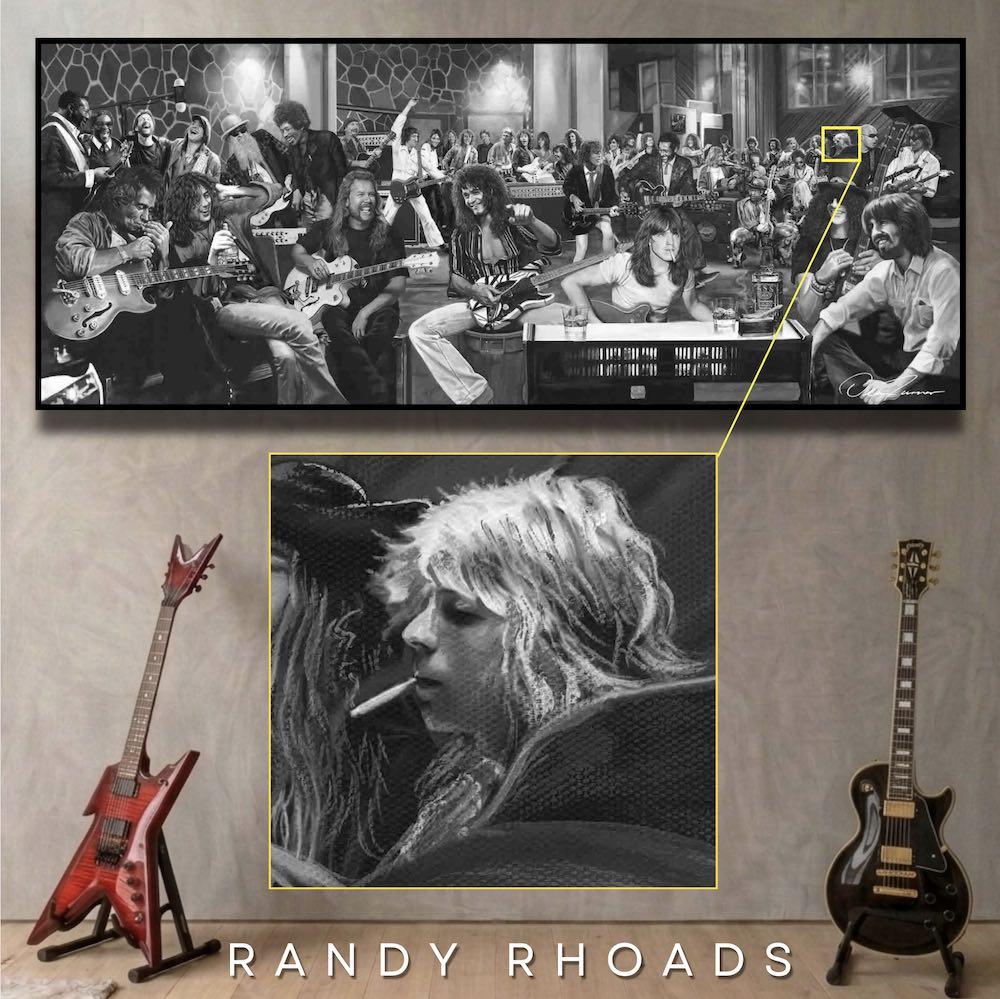
See Randy and 44 other iconic guitarists in Dean's Ultimate Guitarist Reunion artwork.
Read other popular articles on Randy Rhoads...
Randy Rhoads was ready to leave the rock star life behind – and go back to school
Guitar World (August 15, 2025) In-depth feature with new insights from his sister Kathy Rhoads about his plans to quit touring and pursue classical music studies just days before his death. → Read here
Remembering The Brief, Prolific Career & Reckless Death Of Guitar Master Randy Rhoads
Live for Live Music (March 19, 2025) Anniversary retrospective on his career, Ozzy Osbourne connection, and the 1982 plane crash. → Read here
Inside Quiet Riot Guitarist Randy Rhoads' Tragic Death At Just 25 Years Old
All That's Interesting (updated May 2024, still one of the most-read accounts) Detailed narrative of the circumstances surrounding his fatal plane crash and its impact. → Read here
The 250 Greatest Guitarists of All Time (Randy Rhoads section) Rolling Stone
Rolling Stone (October 13, 2023, updated list still heavily referenced) Profiles Rhoads as a pioneering metal guitarist whose short career set the template for hyperspeed solos. → Read here
'Randy Rhoads: Reflections of a Guitar Icon'
The New York Times (May 5, 2022) Review of the major documentary about his life, career, and tragic death (the film remains a key reference point in discussions). → Read here
The Guitars of Randy Rhoads
Premier Guitar (September 16, 2008 – evergreen classic piece)In-depth look at his iconic instruments (Les Paul Custom and custom Vs) with input from luthiers who built them.→ Read here